About Us
Tucker Payment Processing is a pretend company with real AI. It exists to show, in a way you can click on, how customer-facing AI should be governed and secured: what each AI is allowed to do, what it is never allowed to do, and how every control can be seen working.
There are three AI-driven parts:
- Tucker, the customer-support agent on the home page, answers policy questions and, once code has verified who you are, questions about that one demo account.
- Tucker in the store at Tucker's Treats helps shoppers, but can only look things up. Prices and orders are decided by code.
- The AI SOC Squirrel in Cipher's Lair is a bounded security analyst. Code-run detection rules wake it while Cipher attacks the site, and it writes the security report live.
How a chat message travels
Every message passes through the same checkpoints, in order. The AI sits in the middle, boxed in on both sides.
- CloudflareDDoS protection, web application firewall and bot defense. The server accepts web traffic only from Cloudflare.
- Apache web serverHTTPS only, strict security headers, size limits, and the only door to the app.
- Input guardrailsLength and character checks, rate limits, and the prompt-injection shield. Blocked messages never reach the AI.
- Access decided in codePython decides who you are and which single account you may see. The AI never chooses whose data to read.
- Google GeminiThe AI writes the answer, using only read-only lookup tools and the company's own policy documents.
- Output guardrailsAnything that looks like a card number or hidden instructions is masked before it leaves.
- Behind the ScenesEvery step above is shown to you as it happens, on the home page and in the store.
Each AI is bounded
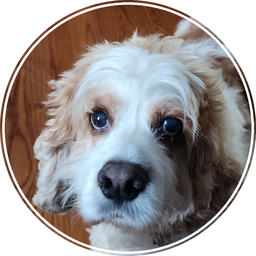
Tucker
Can: answer policy questions, and look up the one demo account code verified.
Cannot: change anything, see another customer, or show more than the last 4 digits of a card.
Tucker in the store
Can: look up products, your cart and your orders from this visit.
Cannot: set a price, give a discount, or place, edit or delete an order.

AI SOC Squirrel
Can: read the run's events and web logs, and write the report.
Cannot: block anyone itself. The block comes from a code rule; the squirrel only proposes actions, and code checks every number it states.
On top of that: a three-way spending cap on AI costs, your IP address is never sent to the AI, and if the AI is unavailable the site falls back to plain facts generated by code instead of failing.
The AI policies behind it
Michael wrote the company's policies first, then built the AI to follow them. Tucker answers from these documents and names his source. See all the policies.
- AI assistant policy: what Tucker may and may not do
- Card security and privacy
- Refunds and disputes
- Data retention
The site is built to recognized standards, and each has a write-up mapping every requirement to the code that proves it: the OWASP Top 10 for LLM Applications, the OWASP Top 10 for Agentic Applications, MITRE ATLAS, the NIST AI Risk Management Framework, ISO/IEC 42001 with its ISO/IEC 42005 impact assessment, the EU AI Act, PCI DSS v4.0.1 and SOC 2. See all nine
The technology
Every technology in use on this website is secured to enterprise grade, far beyond what a simple demo site usually has.
- Google Cloud: a hardened Ubuntu Linux server running Apache, Python (FastAPI) and PostgreSQL.
- Google Gemini on the paid tier, so conversations are not used to train the model.
- Cloudflare in front of everything; the server's firewall admits only Cloudflare.
- Zero-trust admin access: no admin port open to the internet, only Google's identity-checked tunnel with two-factor authentication.
- Least privilege: read-only database access for the chat, one narrow function for placing orders, no database password to steal.
- Monitoring: alerts when a defense fails, a spending threshold is crossed or a lockout happens, plus a daily security summary for the owner.
- Tested: automated tests prove the guardrails hold, and Cipher's 50 live attacks test them again every run.
- Supply-chain and code scanning: every change on GitHub is checked by CodeQL (security flaws in the code), secret scanning (no keys or passwords ever committed) and Dependabot (vulnerable or malicious libraries, with fixes proposed automatically).
Our site's scorecard
Don't just take our word for it. On November 24, 2026 the live site was tested by independent, public security scanners. The first round found three gaps; they were fixed the same afternoon and every scan was run again, then again that evening after further hardening. Each report is a PDF you can download, and each has a link to run the same scan yourself.
| Independent scanner | What it checks | Before | Grade | Results |
|---|---|---|---|---|
| Qualys SSL Labs | HTTPS and TLS configuration | B | A+ | PDF · Re-test |
| Internet.nl | IPv6, DNSSEC, TLS, headers, security.txt, routing | 75% | 96% | PDF · Saved result |
| Mozilla HTTP Observatory | Web security best practices (CSP, HSTS, SRI, cookies) | – | A+ (140) | PDF · Re-test |
| SecurityHeaders.com | Browser security headers | A+ | A+ | PDF · Re-test |
| Sucuri SiteCheck | Malware and blocklists | Clean | Clean | PDF · Re-test |
Fixed the same day: old TLS 1.0/1.1 turned off, DNSSEC enabled, CAA records added and a security.txt published for researchers. That evening: email spoofing locked down (SPF, DMARC reject, null MX), HSTS preload submitted, cross-origin isolation headers added and ping disabled. Download the summary (PDF)
Dig into the code
Everything is open to read on GitHub. Security that only works while the code is secret isn't security. Good places to start:
- chat.py: one chat message through every guardrail, in order
- guardrails.py: the prompt-injection shield and output masking
- tools.py: the only things Tucker can do, each authorized in code
- attacks.py: Cipher's 50 attacks
- soc.py: the AI SOC Squirrel and the code that checks its claims
- tests: the automated tests
Who built it
Michael Cunningham is an information security leader with 25+ years in payments, PCI and cloud security. He has tooled up for the AI governance future and built this site with AI-assisted development, from concept to production in under a week, to show how AI can be put to work safely. Tucker is his real cocker spaniel, and Cipher is his real cat. He doesn't have a squirrel :)
Michael is seeking his next employment adventure.